Chords in the key of D major
The guitar chords in the key of D major are D, Em, F#m, G, A, Bm and C#dim, with the Roman numerals I, ii, iii, IV, V, vi and vii°. Four of them, D, Em, G and A, are open chords. B minor, its relative minor, has the same notes and chords. See the chords of all 24 keys.
The seven chords in D major
F#m and Bm are barre chords at fret 2; C#dim is a closed shape at fret 4. Each diagram is the shape most guitarists hold in standard tuning, and on a piano the same notes make the same chords.
Seventh chords in D major
Stack one more note on each chord, every other note of the scale again, and you have the seventh chords of D major: Dmaj7 on the first note, A7 on the fifth.
How the chords in D major are found
Write out the D major scale: D E F# G A B C#. From each note, take every other note up the scale, three in all: D, F# and A make D, the chord on the first note, and C#, E and G make C#dim, the diminished chord on the seventh. Do it on every note in turn and the seven chords follow the pattern of every major key: major, minor, minor, major, major, minor and diminished.
Each letter from A to G stands once in the scale, so the note between F and G is written F# here, not Gb.
The same steps give the chords of every key: chords in a key.
The relative minor of D major
The relative minor of D major is B minor, on its sixth note. It has the same seven notes and chords, counted from Bm: Bm, C#dim, D, Em, F#m, G and A, so the vi of D major is the i of B minor.
Chord progressions in D major
Seventeen well-known progressions in D major: eleven of them use only the key's own chords, and the other six borrow from outside it, as the 12-Bar Blues does with D7 and G7. Each name leads to its chart and diagrams in D major under chord progressions.
| Progression | Numerals | In D major | In the key? |
|---|---|---|---|
| Pop Axis | I – V – vi – IV | D A Bm G | Stays in the key |
| Pop Axis from vi | vi – IV – I – V | Bm G D A | Stays in the key |
| 50s Progression | I – vi – IV – V | D Bm G A | Stays in the key |
| Major to Minor Four | I – III – IV – iv | D F# G Gm | Borrows F# and Gm |
| Royal Road | IVmaj7 – V7 – iii7 – vi | Gmaj7 A7 F#m7 Bm | Stays in the key |
| Three-Chord Song | I – IV – V | D G A | Stays in the key |
| I–IV–V–IV | I – IV – V – IV | D G A | Stays in the key |
| 12-Bar Blues | I7 – IV7 – V7 | D7 G7 A7 | Borrows D7 and G7 |
| Quick-Change Blues | I7 – IV7 – V7 | D7 G7 A7 | Borrows D7 and G7 |
| 8-Bar Blues | I7 – V7 – IV7 | D7 A7 G7 | Borrows D7 and G7 |
| ii–V–I | ii7 – V7 – Imaj7 | Em7 A7 Dmaj7 | Stays in the key |
| I–vi–ii–V | Imaj7 – vi7 – ii7 – V7 | Dmaj7 Bm7 Em7 A7 | Stays in the key |
| Circle Turnaround | iii7 – vi7 – ii7 – V7 – Imaj7 | F#m7 Bm7 Em7 A7 Dmaj7 | Stays in the key |
| Circle of Fifths | vi7 – ii7 – V7 – Imaj7 | Bm7 Em7 A7 Dmaj7 | Stays in the key |
| Pachelbel's Canon | I – V – vi – iii – IV – I – IV – V | D A Bm F#m G | Stays in the key |
| Lydian Vamp | I – II | D E | Borrows E |
| Mixolydian Vamp | I – bVII – IV | D C G | Borrows C |
The D major scale on the guitar
Degrees: R 2 3 4 5 6 7. Notes: D E F# G A B C#.
You play the D major scale in seven positions across the neck, each within five frets in standard tuning. All of them are under the D major scale, and every other scale under guitar scales.
Keys next door to D major
G major and A major, on the fourth and fifth notes of D major, each differ from it by one note: G major has C where D major has C#, and A major has G# where it has G. B minor, its relative, shares all seven.
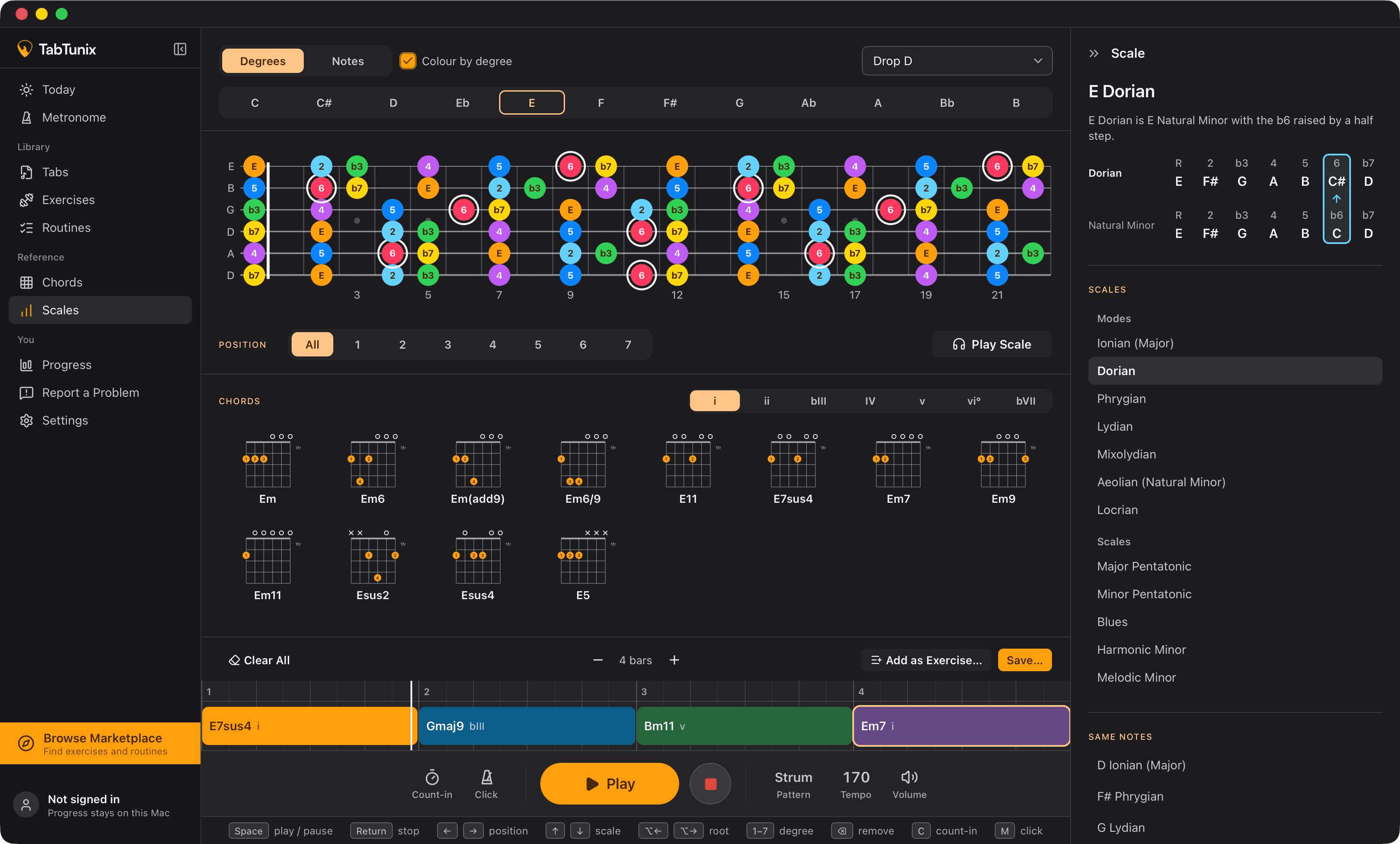
In the app
Play in D major
Loop D – A – Bm – G, or any chords of D major, in TabTunix and play over them at your tempo. Keep the loop as an exercise with a target tempo, and come back to it until the changes are clean.
More progressions in every key under chord progressions, every shape of each chord under guitar chords, and how to change chords faster.
Questions about the chords in D major
Play in D major until its chords are yours. Free, for Mac and Windows.